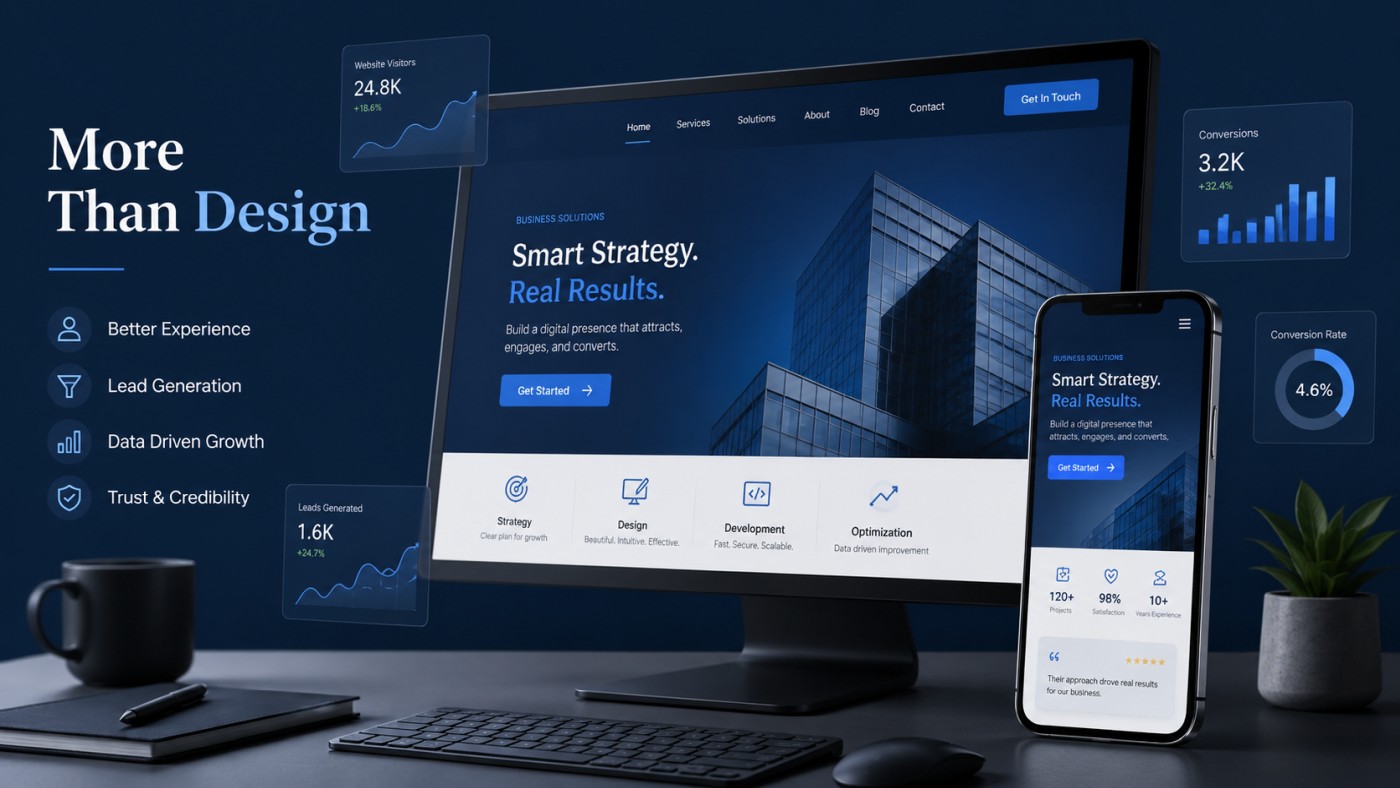
When most businesses think about improving their website, the first thing they usually focus on is design.
A modern design is important. Your website should look professional, feel trustworthy and represent your brand clearly. But design alone is not enough.
A successful website should not only look good. It should help your business attract visitors, guide them through your services and turn them into real leads, customers or booked appointments.
That is why every business website needs a clear conversion strategy.
A Website Should Have a Purpose
Your website is more than an online brochure. It should have a specific goal.
For some businesses, that goal is to generate quote requests. For others, it may be to book appointments, sell products, collect leads, promote services or build trust before a customer makes contact.
If your website does not have a clear purpose, visitors may leave without taking action.
A strong website should answer three important questions quickly:
- What does your business offer?
- Why should the visitor trust you?
- What should they do next?
When these answers are clear, the website becomes easier to understand and more effective.
Clear Navigation Helps Visitors Take Action
Many websites lose potential customers because the information is hard to find.
Visitors should not have to search too much to understand your services, pricing, contact options or next steps. A clean navigation structure helps users move through the website with less friction.
Important pages such as Services, About, Portfolio, Blog and Contact should be easy to access. Calls-to-action should also be visible throughout the website, especially on key sections.
Simple navigation creates a better experience and increases the chances that visitors will contact your business.
Your Homepage Needs a Strong First Impression
Your homepage is usually the first page customers see. This section should immediately communicate who you are, what you do and why it matters.
A strong homepage usually includes:
- A clear headline
- A short value proposition
- A professional visual style
- A main call-to-action
- Trust elements such as reviews, experience, clients or case studies
If visitors understand your business within the first few seconds, they are more likely to continue exploring the site.
Calls-to-Action Guide the Customer Journey
A call-to-action tells visitors what step to take next.
Examples include:
- Request a Free Demo
- Get a Quote
- Book an Appointment
- Contact Us
- View Our Services
- Start Your Project
Without clear calls-to-action, visitors may browse your website but never contact you.
The best websites place calls-to-action naturally throughout the page, especially after explaining a service, showing benefits or building trust.
Service Pages Should Be Built to Convert
A good service page should do more than describe what you offer.
It should explain the problem your customer has, how your service solves it and why your business is the right choice.
Strong service pages usually include:
- Clear service descriptions
- Benefits of the service
- Simple explanations
- Visual examples
- FAQs
- Testimonials or trust signals
- A direct contact option
This helps visitors feel more confident before reaching out.
Mobile Experience Is Critical
Many customers visit websites from their phones. If your website is difficult to read or use on mobile, you may lose leads before they ever contact you.
A mobile-friendly website should load quickly, have readable text, clear buttons and a simple layout.
Forms, menus and contact buttons should be easy to use from any device.
Mobile-first design is no longer optional. It is a basic part of building a professional online presence.
Trust Elements Make a Big Difference
Customers want to feel confident before choosing a business.
Your website can build trust by showing:
- Years of experience
- Client logos
- Testimonials
- Reviews
- Case studies
- Portfolio examples
- Professional certifications
- Secure website features
These elements help reduce doubt and make your business feel more reliable.
Content Supports SEO and Long-Term Growth
A professional website should also support search engine visibility.
Service pages, blog articles and clear website structure help search engines understand what your business offers.
Publishing useful content also allows your business to answer common customer questions, explain your services and attract people who are already searching for solutions.
Over time, this can help your website become a stronger digital asset.
Performance and Hosting Matter Too
Even a beautiful website can lose customers if it loads slowly or becomes unreliable.
Speed, security, backups and technical stability all play an important role in the user experience. This is especially important for WordPress websites, online stores, booking systems and websites that depend on forms or payments.
Premium hosting and proper maintenance help keep your website running smoothly and professionally.
Final Thoughts
A good design can make your website look better.
But a strong strategy makes your website perform better.
Your website should combine design, content, structure, performance, trust and conversion strategy into one complete digital experience.
At WebZtudio, we help businesses create professional WordPress websites, landing pages, premium hosting solutions and maintenance services designed to support long-term growth.
Looking to turn your website into a stronger business tool? Contact WebZtudio to learn how we can help you build a more professional and conversion-focused online presence.